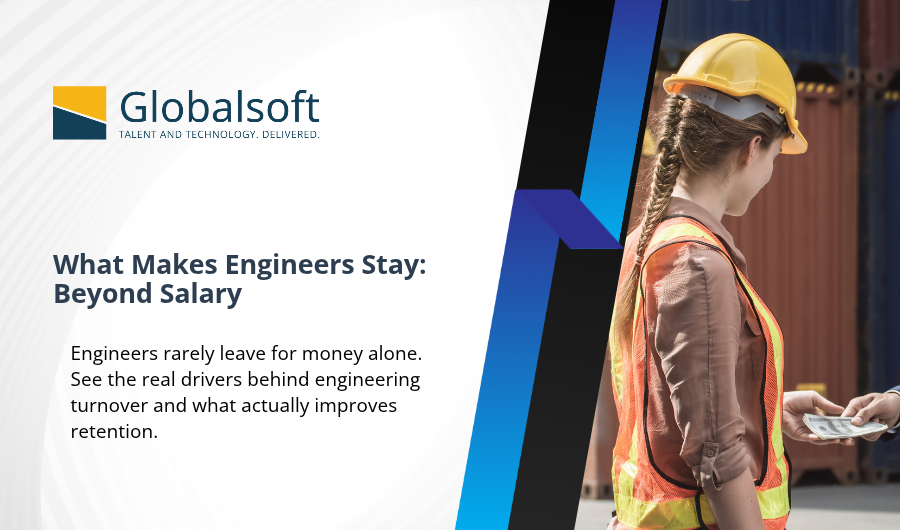
The instinct when a strong engineer leaves is to assume a competitor simply paid more. It’s a comfortable explanation, and it’s usually wrong. Money is rarely the actual reason, even when it’s the stated one in an exit interview. The real drivers sit elsewhere, and companies still treating retention as primarily a compensation problem are missing where their best engineers are actually walking out the door.
What’s Actually Driving Engineers to Leave
Research tracking why senior engineers depart in 2026 points to three factors far more often than pay: a bad direct manager, the single largest controllable driver behind voluntary departures; scope decay after a promotion to a senior or principal title, where the work gets less interesting even as the title gets bigger; and a newer factor, AI fatigue, months spent helping a company integrate AI tools without seeing that effort translate into improved personal work or career trajectory. All three are structural, not financial, and none of them get solved by a raise.
The Manager Relationship Matters More Than Almost Anything Else
Engineers who feel genuinely heard by their manager stay two to three times longer than those who don’t. This is a controllable variable in a way market compensation and macro labor trends aren’t, and it’s consistently underinvested in relative to its actual impact. Senior engineers are also fielding a steady stream of recruiter outreach, often five to fifteen messages a week, and the companies that keep those engineers are the ones where forwarding a recruiter pitch to a manager is a normal, welcomed conversation rather than something to hide. An engineer who feels safe saying “this came in, what do you think?” is an engineer who’s still on the team months later.
Flexibility Has Become a Genuine Retention Lever, Not a Perk
Engineers at companies with genuine remote or flexible work policies report meaningfully higher job satisfaction, and mandatory return-to-office mandates after a period of remote work have become a leading trigger for voluntary departures, cited by a substantial share of engineers who resigned in the past year. Strict five-day, in-office requirements are becoming harder to sustain in a market where engineers increasingly have leverage to choose otherwise, and this factor now sits close to compensation in how heavily it weighs on a decision to stay or go.
Culture Transparency Prevents Mismatch Before It Starts
Retention starts before someone’s even hired. Companies that communicate their actual working culture honestly during recruiting, rather than an idealized version, see meaningfully longer average tenure, because expectations were set accurately before day one rather than discovered as a disappointing surprise a few months in. This also works the other direction: honest culture communication naturally filters out candidates who wouldn’t have been a good fit anyway, reducing early mismatched turnover on both sides.
Compensation Still Matters, Just Not the Way Most Companies Think
Pay isn’t irrelevant, it’s a hygiene factor that stops mattering once it’s fair, and starts mattering enormously once an engineer suspects it isn’t. If a company’s last compensation review was well over a year ago, senior engineers are frequently sitting 15% to 30% below current market rates without realizing the full gap, particularly in fast-moving specializations like AI and machine learning, where the talent premium has moved sharply. Regular, proactive benchmarking, adjusting pay without requiring an engineer to ask, is one of the highest-return retention investments available, precisely because most companies wait for a competing offer to trigger the conversation instead.
Growth and Visibility Matter More Than Company Size
A persistent misconception is that bigger companies automatically offer bigger opportunities. In practice, visibility into meaningful work often matters more than company scale, and engineers are increasingly choosing based on whether they can see a real path forward, not the size of the logo on their resume. Career growth remains one of the most consistent retention drivers across the market, and organizations investing in mentorship, professional development, and internal mobility create an environment engineers can actually picture a future in, rather than one they’re quietly job hunting out of.
What Doesn’t Actually Move the Needle
Some commonly recommended retention tactics carry less weight than companies assume. Quarterly company-wide bonuses, for example, tend to get priced into an engineer’s expected total compensation within a quarter or two, losing their retention effect almost as soon as they’re introduced. Retention investment is more effective directed at the structural factors above, manager quality, meaningful scope, flexibility, and fair, current pay, than spread across generic perks that engineers quickly come to expect as baseline rather than experience as genuine investment.
The Real Cost of Getting This Wrong
Losing a senior engineer isn’t a clean, one-time cost. The fully loaded cost of a senior engineer departure typically runs $400,000 to $700,000 once lost productivity, recruiter fees, signing bonuses, and ramp time for a replacement are all accounted for, and that figure doesn’t capture the compounding institutional knowledge a high-attrition team loses and can’t fully recover. Retention isn’t a soft HR metric in engineering, it’s a direct, substantial line item every time it fails.
The Bottom Line
Engineers rarely leave primarily for money, even when a bigger number is the easiest explanation to offer on the way out. They leave bad managers, work that’s lost its meaning, flexibility that got taken away, and compensation that quietly fell behind the market without anyone proactively catching it. Companies that address these structural factors directly, rather than defaulting to a raise as the retention strategy, keep their strongest engineers meaningfully longer.
Globalsoft Solutions helps companies build engineering teams designed to last, sourcing candidates who are the right fit from the start and supporting the retention factors that actually keep strong engineers in place. Our direct hire and permanent staffing service is built around long-term fit, not just filling a seat. Contact us to talk through your engineering retention strategy.
Sources
- The Engineering Retention Playbook: Why Your Best Engineers Leave (and How to Keep Them) | JobsByCulture
- How to Retain Senior Engineers in 2026: 9 Strategies That Actually Work | JobsByCulture
- Retention Trends in 2026: Why Employees Stay | Employment Metrix
- Tech Candidates Want in 2026: Hiring Guide for Employers | The Morton Way