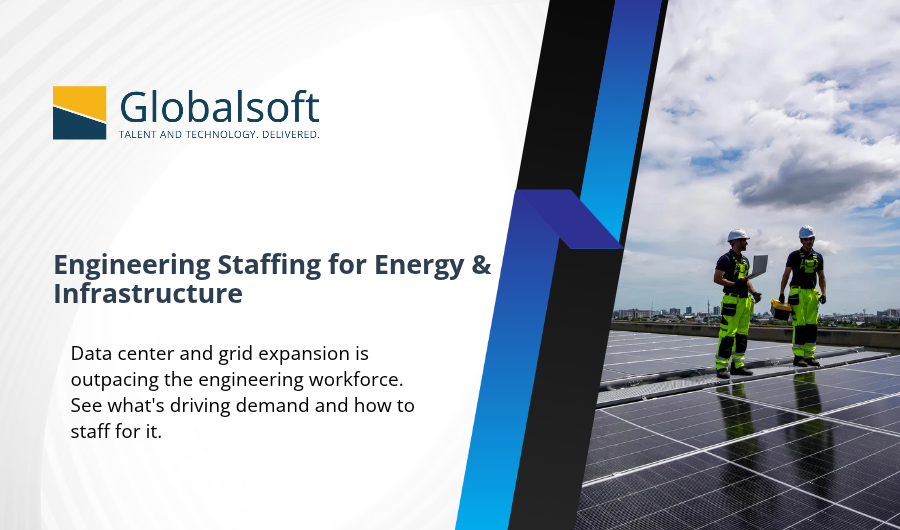
The energy and infrastructure sector is in the middle of one of the most aggressive expansion cycles in its history, and staffing hasn’t caught up. U.S. data center electricity demand surged from 23 gigawatts in 2023 to 42 gigawatts in 2026, and total U.S. IT load capacity could roughly double from about 80 gigawatts in 2025 to 150 gigawatts by 2028. Every gigawatt of that growth needs engineers to design, build, and commission it, and the talent pipeline is falling further behind the pace of the buildout.
The Scale of Demand Is Genuinely Unprecedented
This isn’t incremental growth. The AI data center industry alone is on track to reach 650,000 permanent positions by 2026, with roughly 340,000 roles currently unfilled due to a severe skills shortage. Individual megaprojects illustrate just how concentrated this demand has become, a single AI data center project in Tennessee reportedly required more than 8,000 technical workers. Deloitte’s Engineering & Construction Outlook names data center expansion, semiconductor and manufacturing revitalization, and energy transition and grid modernization as the defining growth drivers shaping engineering demand into 2026 and beyond.
Why This Sector Is Different From a Typical Hiring Surge
Energy and infrastructure staffing carries a compounding pressure most sectors don’t face: the same specialized engineers are being pursued simultaneously by utilities, data center developers, manufacturers, and energy companies, all drawing from the same limited pool. Electrical engineers, power-generation specialists, and construction professionals may be needed across data center projects while also being actively recruited by utilities and manufacturers, intensifying competition for the same narrow slice of talent. That overlap is making an already tight market tighter, particularly in fast-growing regional markets where multiple megaprojects are competing for the same local workforce.
The Roles in Highest Demand Right Now
A few specific engineering functions are seeing the sharpest hiring pressure:
Power infrastructure engineers, who design and maintain the systems that power large-scale facilities, from grid connections and backup generation to on-site microgrids, are critical to keeping increasingly power-dense operations stable.
MEP (mechanical, electrical, plumbing) specialists and commissioning professionals are in especially high demand to manage the liquid cooling systems and advanced power distribution that high-density AI infrastructure requires, systems that look nothing like the cooling and power setups standard data centers used even a few years ago.
Full-lifecycle project engineers, who oversee a build from early design and planning through construction, testing, and final commissioning, are essential as the pace of new capacity coming online accelerates.
Grid modernization and renewable energy engineers are increasingly central as regulatory and sustainability pressure pushes operators toward compliance-driven and renewable infrastructure investment.
Aging Workforce Compounds an Already Tight Market
This isn’t purely a growth-driven shortage. Experienced technicians and engineers are aging out of the energy and infrastructure workforce faster than new talent is entering it, layering a retirement wave directly on top of unprecedented demand growth. The result is a shortage with two simultaneous drivers, expanding need and shrinking supply, that a hiring surge alone won’t resolve.
Retention Pressure Is Just as Real as Hiring Pressure
The tightness in this market isn’t limited to filling open roles. A meaningful share of operators, roughly 35%, report losing staff to competitors actively poaching from the same shrinking talent pool. Firms treating this purely as a hiring problem, without a genuine retention strategy, are effectively staffing their competitors’ teams by proxy.
Why Flexible Staffing Models Matter More Here Than Elsewhere
Given the scale, speed, and regional concentration of this demand, flexible staffing models aren’t a nice-to-have, they’re increasingly the only realistic way to scale fast enough. Partnering with engineering staffing specialists supports the agility and access to scarce talent that a purely internal, traditional hiring process struggles to deliver at the pace megaprojects require. Hiring for this sector needs to be planned early, aligned to the project’s actual lifecycle, and flexible enough to scale as facility requirements evolve, rather than reactive once a deadline is already close.
What This Means for Employers in the Space
- Plan staffing against the project lifecycle, not just current headcount. Build phase, commissioning, and ongoing operations each require different skill profiles, and hiring for all of them at once rarely works.
- Expect to compete on more than compensation. Engineers evaluating opportunities in this space are weighing project stability, access to modern tools, and long-term relevance of the work, not salary alone.
- Build regional talent relationships ahead of need. Markets where multiple projects are competing for the same workforce reward employers who’ve already established a pipeline before the next megaproject breaks ground.
- Treat retention as seriously as recruiting. With competitors actively poaching in this space, a strong hire is only a win if you can keep them.
The Bottom Line
The energy and infrastructure sector is scaling faster than its engineering workforce, and that gap isn’t closing on its own. Employers who build proactive, flexible staffing strategies, planned around the actual pace of the buildout rather than reacting to it, are the ones positioned to keep projects on schedule while competitors scramble for the same shrinking pool of specialized talent.
Globalsoft Solutions helps energy and infrastructure companies staff for the scale and speed this sector actually demands, from power infrastructure engineers to commissioning specialists. Our contract staffing and direct hire and permanent staffing services are built to move at the pace your projects require. Contact us to talk through your next infrastructure staffing need.
Sources
- Data Center Hiring Trends 2026 | The Planet Group
- Forecasts for the Engineering Job Market in 2026 | SSI People
- From Build to Operations: The Most In-Demand Data Center Roles in 2026 | Broadstaff
- Data Center Power & Energy News 2026: Weekly Project Updates | iRecruit
- AI Data Centers Are Creating Thousands of New Jobs, Here’s Who’s Hiring | Metaintro